Suprematism and Eyewear: The Power of Pure Geometry
On Kazimir Malevich, the language of abstraction and the transformation of geometry into wearable design.
A square. A circle. A line.
The simplest forms can carry the most radical ideas.
In the early twentieth century, Kazimir Malevich challenged the traditional relationship between art and the visible world. Rather than representing landscapes, figures or objects, he sought a new visual language based on pure geometric forms.
A century later, these ideas offer a compelling perspective on contemporary eyewear design.
What happens when geometry is no longer treated as decoration, but as the foundation of an object?
When a frame becomes a composition?
When the relationship between a line and an empty space acquires as much importance as the material itself?
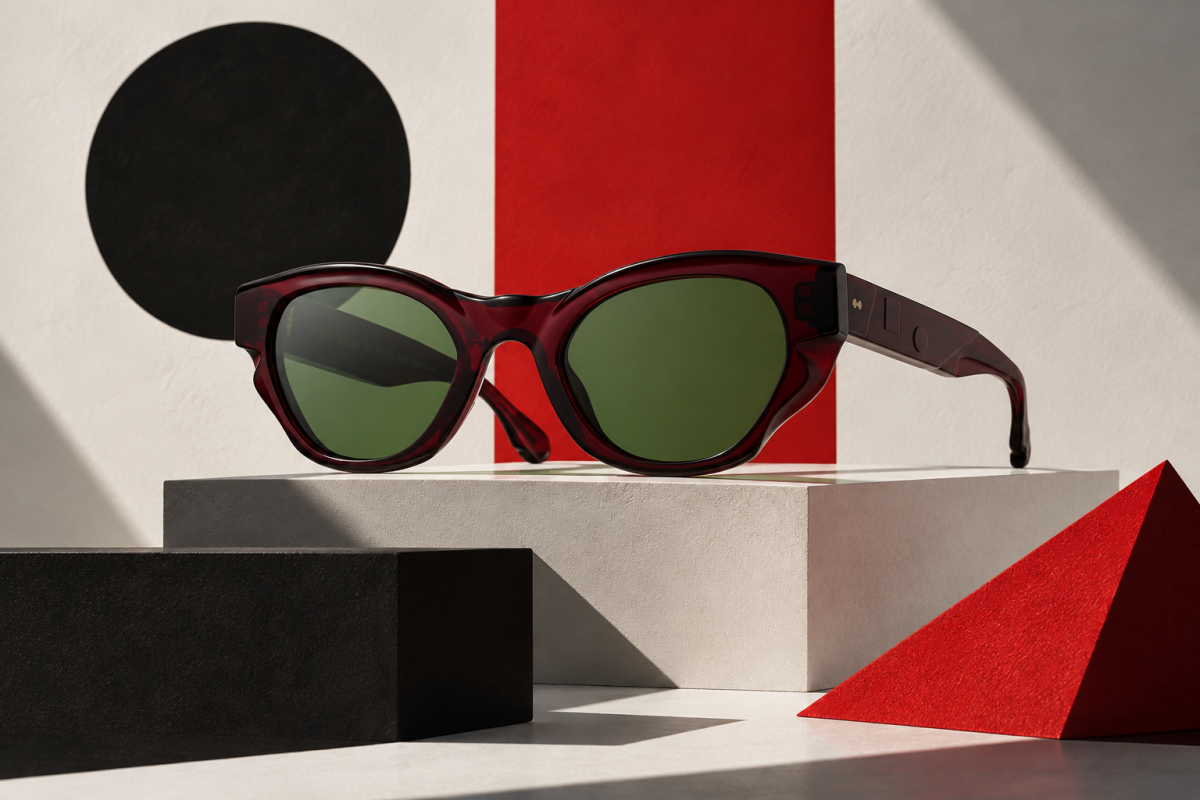
For MASSADA, these questions open a dialogue between abstract art and the intimate architecture of eyewear.
What Is Suprematism? The Art of Pure Form
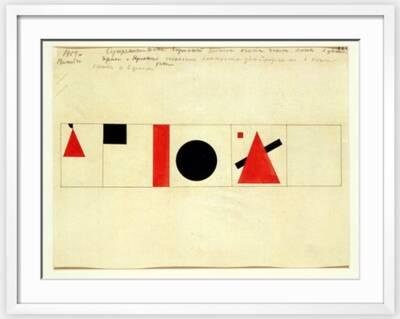
Suprematism emerged through the work of Kazimir Malevich, who publicly introduced his new approach to abstraction at the Last Futurist Exhibition of Paintings 0.10 in Petrograd in December 1915.
His paintings abandoned recognisable subjects in favour of geometric shapes arranged against expansive backgrounds.
Squares, rectangles, circles and intersecting planes became independent elements of expression.
For Malevich, the purpose of painting was no longer to imitate the external world. He sought to explore pure feeling through colour, form and the experience of non-objective space.
His Black Square, first exhibited in 1915, became an emblem of this radical departure.
A simple black quadrilateral against a white field proposed an entirely different understanding of artistic creation.
The painting did not need to represent something else.
Its form was the subject.
This idea remains significant for contemporary design: an object can communicate through its proportions, structure and visual relationships without relying on ornament.
The Square, the Circle and the Language of Geometry
Suprematism demonstrated that elementary shapes could generate complex visual experiences.
A square suggests stability, yet its position can introduce movement.
A circle establishes continuity, while its relationship with surrounding forms can create tension.
A diagonal line introduces direction.
A rectangle can establish rhythm through repetition, displacement or contrast.
In Malevich's compositions, these elements often appear suspended within open space, creating an impression of movement without depicting a recognisable scene.
The significance lies in the relationship between forms rather than in any single shape.
This principle offers a useful way to consider geometric eyewear.
A circular lens opening does not exist independently of the bridge connecting it to another circle.
An angular frame is defined not only by its corners, but by the proportions and directions of the lines that connect them.
The relationship between the upper rim, lower contour and temples establishes a complete visual composition.
Geometry becomes expressive when every element participates in the whole.
From Abstract Painting to Geometric Eyewear
The connection between Suprematism and eyewear is conceptual rather than literal.
A pair of glasses does not become Suprematist simply because it contains a circle or a square.
The more meaningful relationship lies in the discipline of reducing a design to its essential elements.
In eyewear, every line serves several purposes.
It defines the lens opening, contributes to the structure and establishes the visual character of the frame.
A bridge connects two forms while determining their distance and balance.
The temples extend the composition into three-dimensional space.
Even the absence of material becomes important.
The openings around the lenses, the space between the frame and the face, and the intervals between structural components influence the perception of the entire object.
A geometric frame can therefore be understood as a composition of solid and empty spaces.
Like an abstract painting, it depends on relationships.
Unlike a painting, however, eyewear must also respond to the practical requirements of the human body.
This tension between artistic intention and functional precision makes eyewear a particularly interesting field of design.
The Power of Reduction: Less as an Artistic Decision
Reduction is often associated with minimalism, but simplicity is not necessarily the absence of complexity.
A restrained composition can require extraordinary attention to proportion.
When decorative elements are removed, the remaining decisions become more visible.
The curvature of a rim.
The angle of a corner.
The distance between two shapes.
The thickness of a line.
Each detail acquires greater significance.
Malevich explored the expressive possibilities of reduction throughout his Suprematist period.
In Suprematist Composition: White on White (1918), a tilted white quadrilateral appears against a subtly different white background.
The composition reduces colour contrast almost entirely, yet maintains a sense of movement and spatial ambiguity.
The lesson for design is not that every object should become minimal.
Rather, reduction can reveal the expressive potential of form itself.
In contemporary designer eyewear, a carefully considered silhouette may establish a distinctive identity without relying on elaborate decoration.
Precision becomes expression.
Movement, Balance and the Space Between Forms
Suprematist compositions are frequently associated with geometric order, yet they are far from static.
Malevich used diagonals, displacement, overlapping planes and contrasts of scale to create dynamic relationships.
Shapes appear to advance, retreat, intersect or float.
The white background is not merely an empty surface. It participates in the experience of space.
Eyewear introduces another dimension to this relationship.
A frame is experienced from multiple perspectives.
From the front, its geometry may appear balanced and symmetrical.
From the side, the temples reveal its extension into space.
As the wearer moves, light changes the perception of surfaces, edges and volumes.
The frame becomes part of a continuously changing composition.
The face itself contributes to this movement.
Expressions alter the relationship between the object and its surroundings, while the position of the head transforms the frame's visual presence.
A geometric object becomes a living composition.
Colour as an Independent Element
In Suprematism, colour was not restricted to describing the appearance of objects.
It became an independent artistic element.
Black, white, red, yellow and other colours could establish relationships through contrast, intensity and spatial arrangement.
In eyewear design, colour can perform a similarly structural role.
A dark upper rim may emphasise the horizontal direction of a frame.
A contrasting bridge can establish a visual centre.
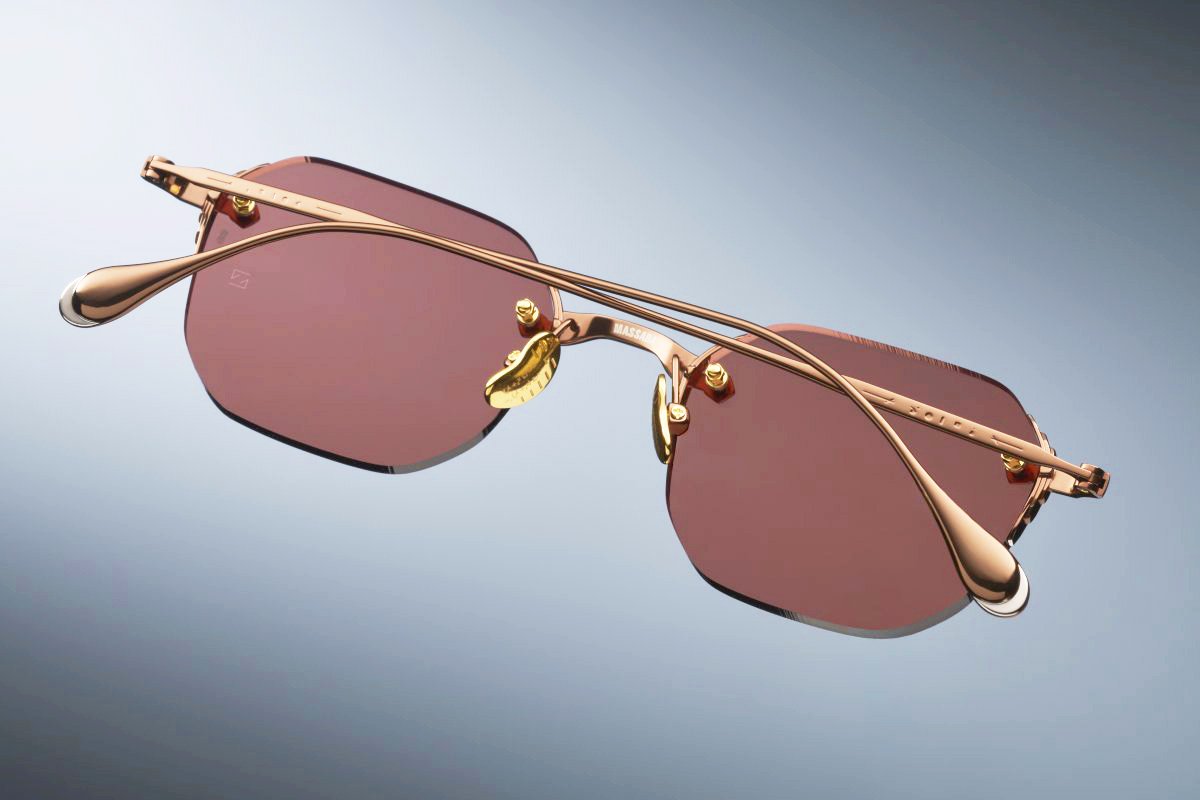
A restrained metallic finish may allow the geometry of the silhouette to remain dominant.
Colour can also alter the perceived weight of a design, making one element appear more prominent than another.
These possibilities demonstrate that colour and form cannot always be considered separately.
Together, they determine the rhythm and balance of an object.
Beyond Trends: The Enduring Relevance of Geometric Design
Geometric eyewear has appeared in many forms throughout the history of fashion and design.
Yet geometry itself belongs to no single period.
Circles, squares, rectangles and angular structures remain fundamental elements of visual expression.
Their relevance depends on how they are interpreted.
A geometric frame can appear restrained or expressive, architectural or organic, depending on its proportions, materials and construction.
For an independent eyewear brand, this vocabulary offers a way to explore identity beyond seasonal references.
The objective is not to reproduce the appearance of a historical artwork.
It is to understand the ideas that made that artwork significant and translate them into a different creative discipline.
MASSADA: Geometry as an Artistic Language
At MASSADA, the relationship between art and eyewear begins with form.
The reduction of Suprematism offers a way to consider the essential structure of an object.
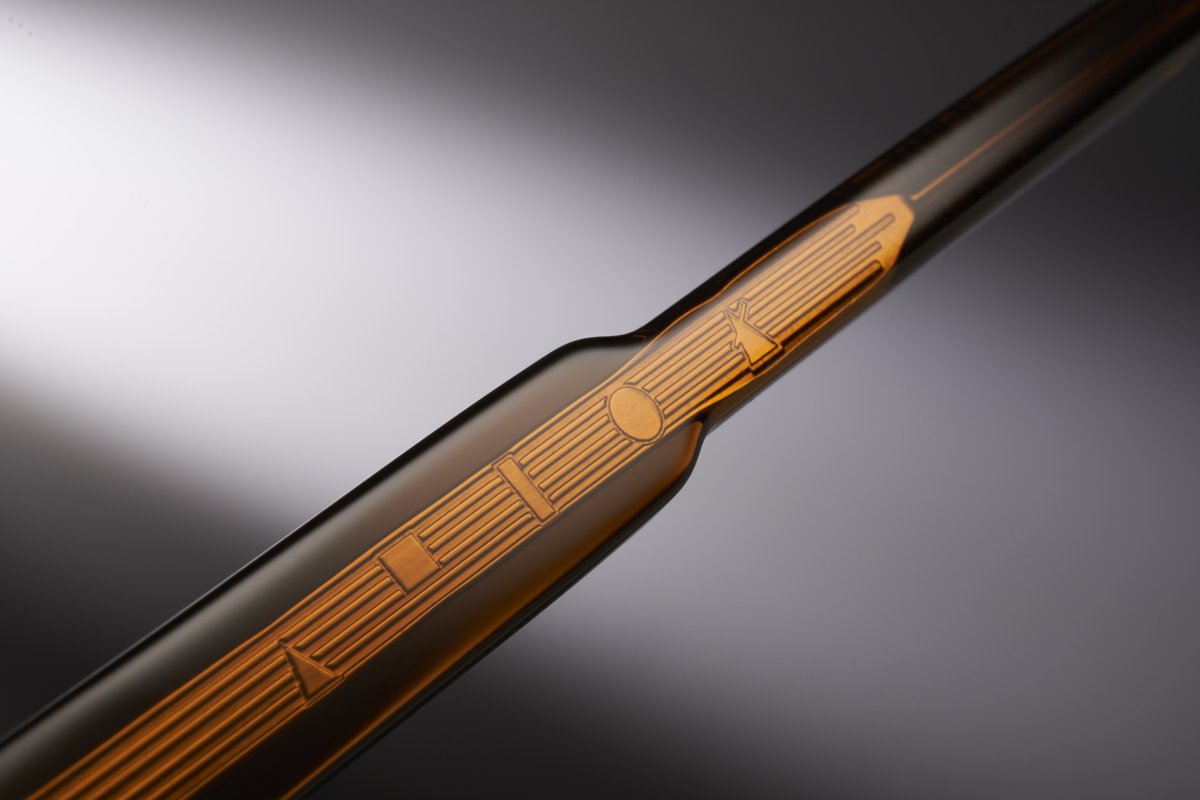
A circle becomes a lens opening.
A line becomes a structural connection.
A geometric relationship becomes a composition shaped by the human face.
These transformations do not turn eyewear into a reproduction of abstract painting.
They establish a dialogue between artistic thinking and functional design.
The result is an object that exists between disciplines.
Part architecture.
Part sculpture.
Part personal expression.
An everyday object conceived with the sensibility of an OBJET d'ART.
Geometry is not simply what we see. It is how form begins.