Sculpture You Can Wear: The Art of Eyewear Design
On Barbara Hepworth, Alexander Calder and the relationship between sculpture, space and the objects we wear.
A sculpture does not end at its surface.
It extends into the space around it.
Its presence is defined not only by material, but by the relationships between solid form, empty space, light and movement.
A curve directs the eye. An opening transforms volume. A delicate line can establish balance without appearing to possess weight.
These principles have shaped the language of modern sculpture. They also offer a compelling way to reconsider an object we encounter every day: a pair of glasses.
Eyewear exists at the intersection of structure and expression. It is designed to perform a function, yet its form can communicate through proportion, geometry and the relationship between material and space.
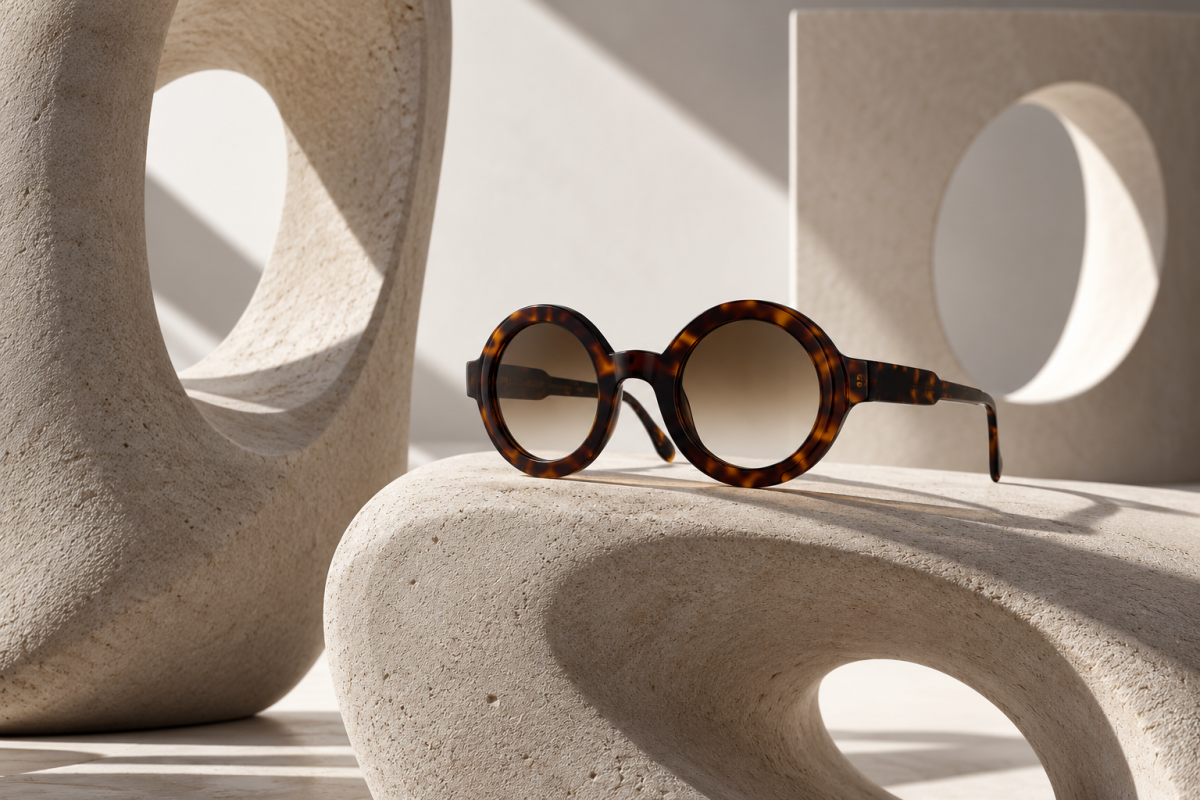
What happens when eyewear is approached not simply as an accessory, but as a small-scale sculptural object?
For MASSADA, this question opens a dialogue between contemporary design and the artistic exploration of three-dimensional form.
When Sculpture Becomes an Object of Design
Sculpture occupies space.
Unlike an image experienced primarily from a single viewpoint, a sculptural object reveals different relationships as the observer moves around it.
Its silhouette changes. Its surfaces interact with light. Its internal openings and surrounding spaces become part of the composition.
Eyewear shares this three-dimensional condition.
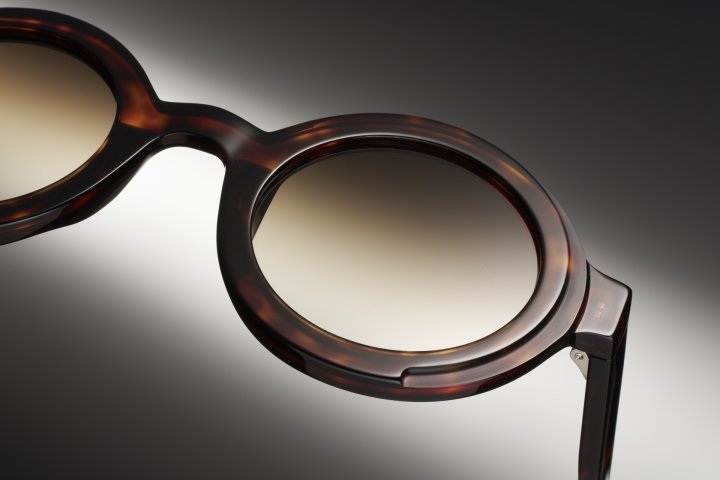
A frame may appear restrained when viewed from the front, yet reveal an unexpected architectural structure in profile.
The bridge connects two forms. The temples extend the composition beyond the face. The rims define a relationship between the eyes and their surrounding space.
Each component contributes to the perception of the object.
The result is not merely a silhouette, but a structure that exists in multiple dimensions.
This is where eyewear design begins to enter the territory of sculpture.
Barbara Hepworth: The Art of Empty Space
British sculptor Barbara Hepworth was one of the significant figures of twentieth-century modern sculpture.
Her practice explored relationships between form, material, landscape and the space contained within sculptural objects.
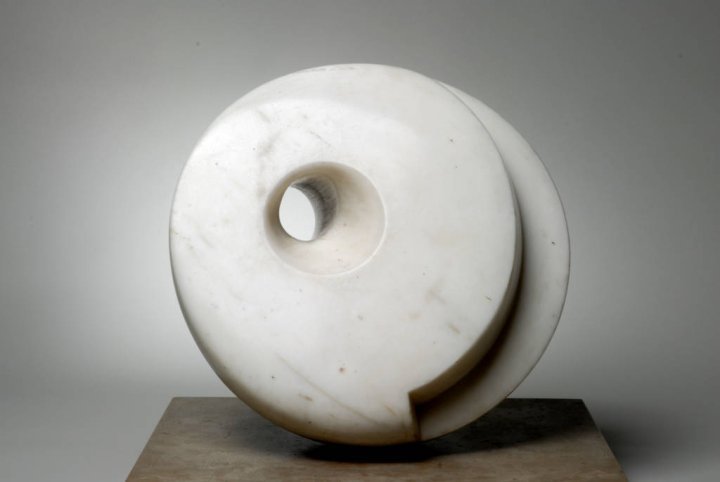
In the early 1930s, she began creating pierced sculptures in which openings became essential elements of the composition.
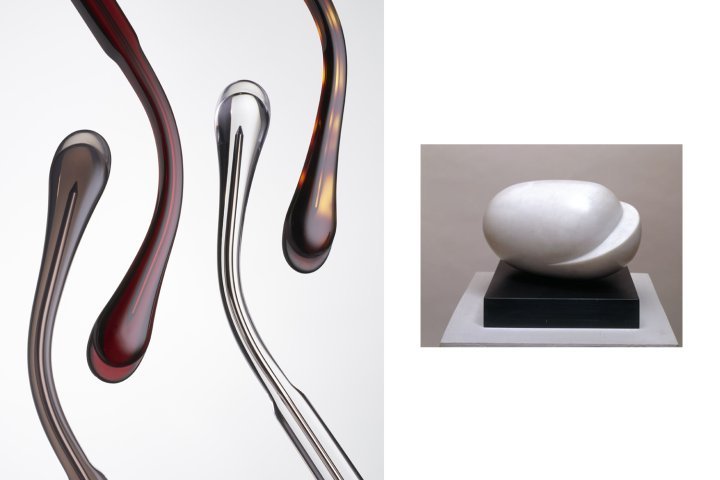
Her Pierced Form, probably carved in 1932, introduced a central opening into a simplified sculptural volume.
Rather than treating the opening as an absence, Hepworth made it an active part of the work.
The space inside the sculpture became inseparable from its exterior form.
This approach transformed the relationship between mass and emptiness.
A sculpture could be understood not only through the material it contained, but through the space it revealed.
The Importance of Negative Space in Eyewear
The concept of negative space offers a particularly interesting perspective on sculptural eyewear.
A frame is defined by its material structure, but the openings surrounding the lenses are equally important to its appearance.
The distance between the lenses establishes rhythm.
The relationship between the bridge and the surrounding openings determines visual balance.
The space between the frame and the face influences how the object is perceived.
These empty areas are not incidental.
They participate in the composition.
A frame with a substantial upper structure and delicate lower contours may create a sense of visual tension.
A thin geometric construction may emphasise openness, allowing the face to remain visible through the object.
Hepworth's exploration of pierced forms offers a way to understand this relationship.
The most expressive element of a design is not always the material itself.
Sometimes, it is the space that the material allows us to see.
Alexander Calder: Drawing in Three Dimensions
Where Hepworth explored the relationship between mass and space, American sculptor Alexander Calder introduced movement as a central element of sculptural composition.
During the late 1920s, Calder developed wire sculptures that transformed drawing into three-dimensional form.
A continuous line could define a figure without the mass traditionally associated with sculpture.
The surrounding space became part of the work.
In the early 1930s, Calder extended these investigations into abstract kinetic sculpture.
His mobiles brought together suspended elements that could move in relation to one another.
Their compositions changed through movement, balance and the interaction of their components.
Calder also created stationary abstract sculptures known as stabiles.
Together, these approaches challenged the idea that sculpture must be a fixed, solid volume.
A work could be defined through line, movement and relationships in space.
Balance as a Design Principle
Calder's mobiles offer an important lesson for contemporary eyewear design.
Balance does not necessarily require visual symmetry.
Different elements can establish harmony through their proportions, positions and relationships.
In a mobile, each component contributes to the equilibrium of the whole.
In eyewear, balance is also fundamental, although the requirements are different.
The frame must respond to the anatomy of the wearer while maintaining its intended visual character.
The relationship between the front, bridge and temples determines both the construction and the appearance of the object.
A delicate line can support a visually expressive form.
A geometric element can introduce tension without overwhelming the composition.
The challenge lies in creating coherence between all the components.
Balance becomes an artistic and functional consideration.
Eyewear as a Moving Composition
A sculpture may change as the observer moves around it.
Eyewear introduces another possibility: the object moves with the person wearing it.
A frame is never experienced from one perspective alone.
It changes as the head turns, as the wearer enters a different environment or as light moves across its surfaces.
A metallic edge may become more prominent under direct illumination.
A curved temple may reveal its structure only in profile.
An angular frame may appear architectural from the front and unexpectedly fluid from another viewpoint.
These transformations create a relationship between the object, the body and the surrounding environment.
The wearer becomes part of the composition.
Sculpture becomes personal.
Material, Light and the Sensibility of Form
Sculptural expression depends not only on shape, but also on material.
Stone, bronze, wood and metal each offer different possibilities for volume, surface and the interaction with light.
In eyewear, material plays an equally important role.
A polished surface can emphasise the movement of light across a frame.
A matte finish may soften reflections and draw attention to its silhouette.
A slender metallic structure can suggest visual lightness, while a more substantial construction creates a different sense of presence.
These effects are not purely decorative.
They influence how the proportions and surfaces of an object are understood.
The material becomes part of its visual language.
In sculptural eyewear, the relationship between material and form is especially significant because the object exists so close to the human face.
Even subtle differences in thickness, curvature or surface treatment can alter the overall composition.
Beyond Ornament: The Art of Reduction
Sculptural eyewear does not require excessive decoration.
Its artistic character can emerge from the precision of its construction.
A carefully considered curve.
An unexpected transition between two lines.
An opening that changes the relationship between solid and empty space.
A bridge that becomes a central architectural element.
These details can establish a distinctive identity without relying on ornament.
Reduction, however, is not simply the removal of elements.
It is the process of identifying which elements are essential to the expression of an object.
When every component has a purpose, the design becomes more coherent.
This approach allows eyewear to move beyond temporary stylistic references and develop a visual language grounded in proportion, structure and form.
MASSADA: The Face as a Sculptural Space
At MASSADA, the relationship between art and eyewear begins with the understanding that a frame is a three-dimensional object.
It exists in dialogue with the human face.
The artistic investigations of Barbara Hepworth offer a perspective on the relationship between material and empty space.
Alexander Calder's work introduces questions of movement, line and balance.
These ideas provide a conceptual framework for considering eyewear beyond its conventional role as an accessory.
A frame becomes a composition of volumes and openings.
A line becomes a structure.
A curve establishes movement.
The face becomes the space in which the object finds its final expression.
Eyewear remains functional, yet its design can invite the same attention we give to a carefully considered work of sculpture.
An intimate object.
A personal architecture.
A sculpture you can wear.
MASSADA — OBJET d'ART.