Giving form to the infinite
Sculptural precision
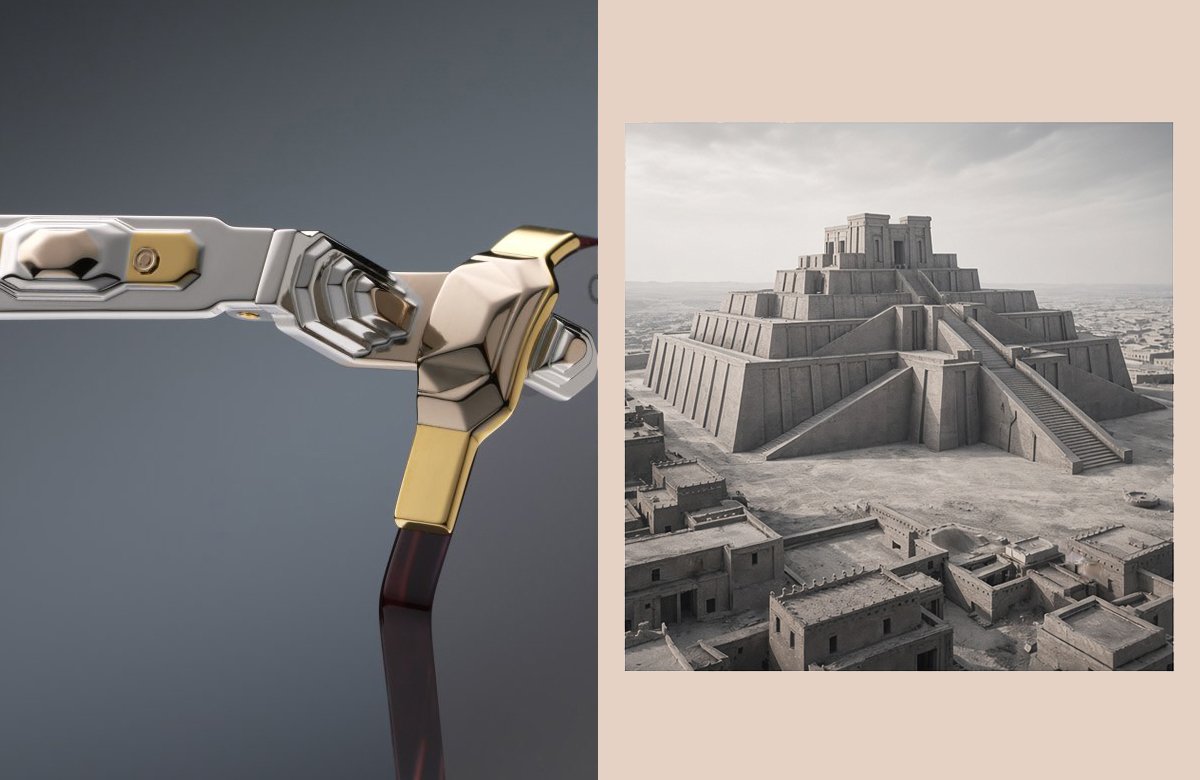
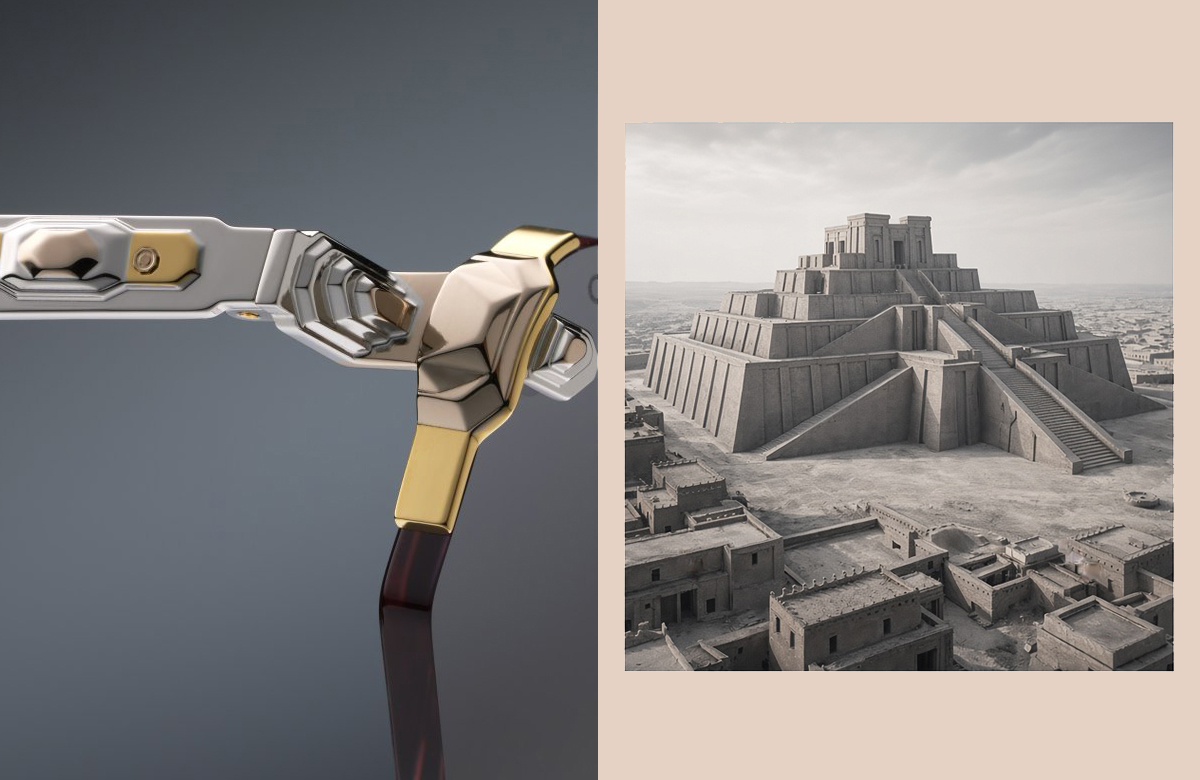
Inspired by the monumental architecture of ancient Babylon and the cascading geometry of the Ziggurats, WHITE CIRCLE OKEANOS transforms advanced metallurgy into an object of symbolic presence, sculptural precision and refined excess.
The ziggurat rises as a series of receding terraces — solid mass stepping toward the heavens, each level smaller than the one beneath it, creating a rhythmic, ascending cascade of pure geometry. These structures were not merely buildings; they were thresholds between the earthly and the divine, “houses of the foundation of heaven and earth.” Their monumental weight, their unapologetic vertical ambition, and their strict mathematical progression of form speak of power, ritual, and the human desire to give physical shape to the infinite. In WHITE CIRCLE OKEANOS this cascading logic is distilled: successive planes of cold-rolled titanium advance and recede with the same deliberate hierarchy, turning the frame into a wearable temple.
Luminous Tension
At the same time, the temple is inspired by Alexander Rodchenko’s "White Circle" (1918). In that seminal Constructivist painting, a luminous white circle, edged with a taut reddish-brown contour, overlaps a darker circular mass against a pale ground. Rodchenko reduced painting to its purest constructive elements — line, plane, colour, and the tension of spatial projection. The white circle does not simply sit on the surface; it advances, asserts, and yet remains in perpetual dialogue with the darkness it partially conceals. It is geometry charged with presence, abstraction charged with almost sacred intensity.
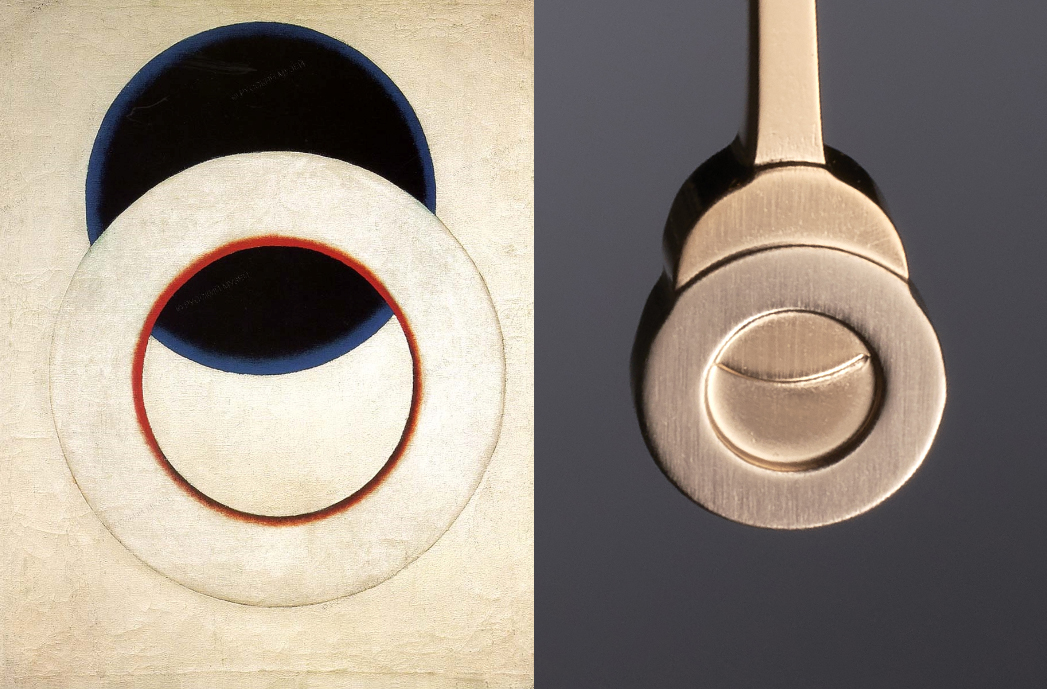
WHITE CIRCLE OKEANOS inherits this dual heritage. From the ziggurats it takes the language of monumental layering, cascading mass, and symbolic ascent. From Rodchenko it takes the radical purity of the circle, the precise interplay of solid and void, light and shadow, and the conviction that the most elemental form can carry the greatest emotional and intellectual weight. The result is an object that is simultaneously archaic and ultra-modern: a hedonistic and symbolic Objet d’Art in which the cold force of 740 tons of pressure, the refinement of titanium grain from 500 μm to 50 μm, and the hand-finished three-tone 24K gold surface become the contemporary equivalent of baked brick and sacred geometry.
Here, advanced metallurgy does not merely serve function. It becomes the medium through which ancient architectural ambition and Constructivist purity are reborn as something worn, intimate, and unapologetically excessive.